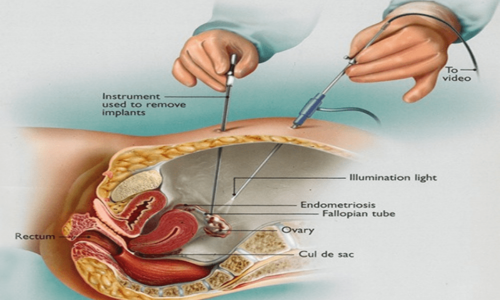
Laparoscopic hernia repair is one of the two main modern approaches (along with robotic-assisted, which is essentially an advanced form of laparoscopic). It is especially common for inguinal (groin) hernias, bilateral hernias, recurrent hernias after open repair, and many ventral/umbilical/incisional hernias. It is also the standard for most hiatal hernia repairs (often combined with fundoplication for reflux).
Anesthesia General anesthesia (you are fully asleep). Rarely spinal anesthesia is used.
Port Placement Surgeon makes 3–5 small incisions (5–12 mm each):
Identification & Reduction of the Hernia Camera (laparoscope) gives a magnified high-definition view. The hernia sac is identified from inside the abdomen, gently pulled back (reduced), and often separated from important structures (cord structures in men, round ligament in women).
Mesh Placement (the key strengthening step) Two main laparoscopic techniques for inguinal hernias:
For ventral/umbilical/incisional hernias: mesh is usually placed intraperitoneally (IPOM technique) with special coated mesh that is safe against bowel.
Mesh Fixation Mesh is secured with:
Closure Gas is let out, ports removed, incisions closed with absorbable suture or glue + Steri-Strips. Usually no drains.
Aaradhya Nursing Home provides reliable and compassionate medical care for diabetes, hypertension, thyroid, and general health issues. Led by Dr. Ankita Singh (MBBS, MD), we are committed to delivering accurate diagnosis and patient-focused treatment.
Aaradhya Nursing Home provides reliable and compassionate medical care for diabetes, hypertension, thyroid, and general health issues. Led by Dr. Ankita Singh (MBBS, MD), we are committed to delivering accurate diagnosis and patient-focused treatment.
Aaradhya Nursing Home provides reliable and compassionate medical care for diabetes, hypertension, thyroid, and general health issues. Led by Dr. Ankita Singh (MBBS, MD), we are committed to delivering accurate diagnosis and patient-focused treatment.
© 2025 Aaradhya Nursing Home Powered by GL Service & Solutions Pvt Ltd